




Welcome to my Art & Antiques

Tips, Thoughts & Observations
Daily Fakes, Fraud, False &/or Misleading Descriptions on eBay, and
*** Janie's eBay Tips & Cautions of the Day, Forewarned is Forearmed! ***
If you have any QUESTIONS Please don't be shy if you have any QUESTIONS just use the Link above, either for something On my Site or even on eBay or, something you own .
* Everything on my Site is from a smoke free, pet free & cared for home environment.
PLEASE, use the Contact Link at the TOP of each Page for any information, and please do not hesitate to contact me with Questions or, for Photos.
From Experience, My 'OBSERVATIONS' On eBay+ on eBay 'Sellers' and then, "Forewarned is Forearmed".
* eBay's 'Global Shipping' Scams both Sellers and Buyers. eBay sells this to Sellers, who will not on their own calculate the USPS or Postage themselves and, take the trouble to Mail it themselves.
Sellers Mail the Sold item to eBay who puts it into a padded envelope and then charges Buyers upwards from $18.00 and Pockets the Profit. Only Winner is eBay!
Personally, I Avoid Sellers using 'Global' Shipping or, you are being Scammed. Your Choice.
eBaySellers who will either Not respond to or do Not allow Questions to be asked, should simply be 'AVOIDED'.
More and more Sellers are intentionally or inadvertently NOT giving CONDITION Details, or Why something is described to be, 'Sterling or Solid Silver, so, insist on an exact Condition Report in Writing without relying on the Photos which are Misleading at best. Item #231139344623 is a perfect example. Also, look carefully at Dimensions & Feedback on Sellers, so look at Feedback carefully before bidding. Sellers who split 'Sets' of anything, increase the Risk of your Not getting the complete Set, e.g. 2 auctions for 6 Cups or, 6 Spoons each.
Some Sellers have removed the Buyer's Option to 'Ask a Question'.
Sellers like 'RealReal' who often offer Discounts of 60% to 75%. One must ask oneself How much are their Goods Marked UP in the first place.
eBay Seller "carpe.d.antiques" in the U.K. cannot be trusted including, Lee's assurances and his Condition Reports.
eBay Seller "stunningfinds2012" is one such Seller who will Not allow Questions yet, states Not to file a dispute, Contact them instead. Beware & Avoid.
BEWARE of 'Deceitful Descriptions' e.g. 'Some very minor Blemishes', which turn out to be dents, dings and an Old Repair. see Item#300439985201
or, 'Condition as Expected'.....
Avoid a Seller Whose Condition Report consists of the item being in 'Good Condition as far as He or She is concerned or, the Photos show what you are Buying.
** SELLERS to avoid: 'stunningfinds2012' and ' Clms33' And, 'windsongestatesservices'.. Seller give NO Description has 5 Negatives this month and tells Buyers they are Buying 'PHotos'.
In France, brocs_en_stoc in France. Grossly misleading descriptions. h Look at eBay item#252468580637 and the Description. False, or Grossly Misleading at best. This is Plated Silver not Sterling, I have an identical example.
Seller has just changed his Description at my instance and he thanked me.
Look at Feedback for this Seller which explains the problem. 'conway012012' and @ $500.
CONDITION, Condition & Condition should be your '3 Golden Rules' when buying any Antiques.
With Real Estate, the 3 Rules are: Location, Location & Location.
I cannot emphasize enough, the importance of Condition, yes, and over Price.
Price after all, is dependent on Condition as well as other factors, such as Rarity and Hallmarks which are the DNA of the object, telling You when, where and by whom it was made.
When you see Items are sold "AS IS" or, see Photos for Condition, then Ask a lot of Questions about Condition, you will have No recourse even with PayPal.
Do Not just compare Prices.
eBay item Eloi Pernet, # 182570013069 & #252973757980 are both missing the Spring from the Scissors, and not disclosed.
See Cigars for an Example.
Also, item # 182601637881, Photo shows Spring Broken, not disclosed.
ELOI PERNET, France - Silversmith
On eBay, April 18, an 1857 3pc 100Franc Gold multitool SOLD, for US $1,825. SEE item # 312108677045 .
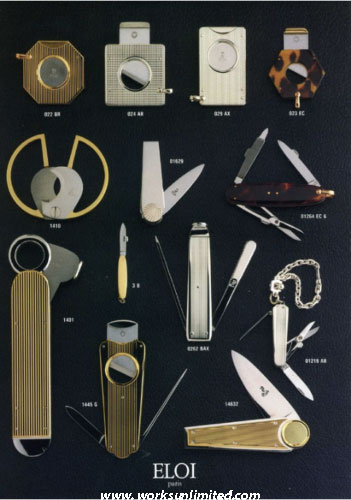
On eBay, April 18, 2021 an 1857 3pc 100Franc Gold multitool SOLD, for US $1,825. SEE item # 312108677045.
In the early nineteenth century the region of Nogent-Bassigny became an important center for French cutlery. By 1880, more than six thousand people were manufacturing knives, scissors, surgical instruments and hand tools. Each community had its specialty. Biesles, situated 10 km from Nogent, became the center for luxury items, folding knives and cigar cutters.
Charles Louis Eloi Pernet belonged to the third generation of knife makers in Biesles. In 1901, at the age of 12, he became an apprentice in a local cutlery. It was not until 1920 that Eloi decided to establish his own factory, - Eloi Pernet.
With a small group of the best artisans he could find, Eloi quickly became renown for its craft.
In 1925 Eloi won the "Meilleur Ouvrier de France" (Best Craftsman of France) award for a multi-blade knife.
The following year, he and his artisans again won the "Meilleur Ouvrier de France" award.
The World began to take notice as did high end firms like Hermes, Dupont, Vuitton, and Dunhill all sought Eloi's fine craftsmanship adding their prestigious names to items produced by Eloi Pernet.
Please SEE my 'Cigars & Smoking' for an illustration of a Complete and 1 Defective Example of Eloi Pernet. Be very Careful that the Utnensils are complete.
See item# 292097041519
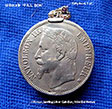
-5 francs Coin, Eloi Pernet in Bad Condition.
MINERVE HEAD, with either the #1 or the #2
The #1 or the #2 on French Silver
Silver Content, e.g. 950/1000 using #1 and with 800/1000 using #2 is a very important consideration when buying French Silver.
The former denotes Silver content of 950/1000 and the latter, 800/1000.
France began using the Minerve Head in 1838 using it through 1972 to Control the Silver Content and as part of their Tax system.
18th & 19th Century French Silver
One only has to hold an 18th Century Wine Taster to understand the significance as well as the differences between 18th Century and XIXth Century Silver, apart from a Description.
XIXth Century French .950 Silver, higher silver content than English Sterling which is 925/1,000 is the most sought after, i.e. after 18th Century Silver which understandably, is more rare and more expensive.
Google 18th Century Wine Tasters for a better understanding. One example dated 1776 in the UK is @ Price: £3,400. Pounds Sterling.

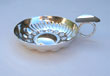
WINE TASTERS or Tastevins, or Wineskin Weinschlauch, or Taste-vins
or, for Scotch drinkers, a sterling silver Scottish 'QUAICH'.
More importantly with Wine Tasters, Tastevins and other Silver used with Wine etc. the higher the Silver content, the less risk of 'bleeding', i.e. the metal coming through and therefore, Sterling Silver, for health reasons, is the safest for
use.
Try to find a Custom Made or Special Order Example which ususally is Heavier and Finer Quality than the 'Commercial' examples that weigh anywhere from 25, gams to 50, grams.
Be 'selective' and be patient.
See Tastevin, eBay item# 262852552007 an .800 Italian Silver Wine Taster, already suffering from Bleeding of base metal through the Silver.
See also Tastevin, item# 12257441245 - Finger Ring has a 'Crack' and Not disclosed. Carefully Examine Photos ALWAYS.
When you see the use of the following Terms in Descriptions, e.g. Wine Tasters being described by Sellers @ Ruby Lane as being, 'solid silver' or, 'pure silver" or Sterling Silver, or 'Tested' as Silver, my Suggestion is to always ask for Details of All of the Hallmarks.
eBay item #282152980926 a Wine Taster described as Sterling Silver, no Hallmarks, but Tested, just removed. I asked Seller the Questions I suggest that you ask.
Test used was a Scan.
In my 30+ years of Collecting, I have never seen a 'pure silver' nor a 'solid silver' wine taster! and that is not to say that one doesn't exist.
The purest in Silver (Ag) Tastevin I have seen and that I own, is the French 18th Century Silver Tastevin with .958/1000 parts Silver and, it is the finest or the purest of Silver.
Sellers e.g. THEMODERNISTEXCHANGE, that tell You to 'See the Photos' for item's Condition should be avoided, unless you are buying Photos. see item Cuff-links, eBay #112159564773. With Enamel, Hairline cracks are common but, not easily noticeable on photos and seriously affect Condition and Value..
Each such Seller is evading the Question. With the 'Minerve' Head, ask if it is #1 or #2 with .950 Silver it is the #1 and .800 Silver with the #2.
There is an important difference both in the Use and the Quality of using higher Silver content.
I only collected the finest Silver, .950 or .958 in France and .925 everywhere else.
Be careful with item Descriptions, 'étain' is Pewter or Tin but Not Bronze.
If there are Hallmarks, then they should be fully described but not stating that the item has the 'usual' Hallmarks or, is simply Hallmarked without describing the Hallmarks and the Silversmith if known.
Avoid any Sellers unless they will Answer All of your Questions clearly aslong with any Seller who does not accept Questions.
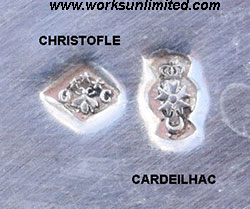
CHRISTOFLE Hallmarks again are the Key to distinguishing between a modern Copy and an Original Christofle. e.g. the Sauceboat with Swan Ladle Sold on eBay, item #290886397121 shich Sold for just under $900. was clearly a modern Copy but Sold as an Original and an exagerated Price. I have an Original Sauceboat with Swan Ladle by Christofle.
Considering the Price, would you Buy an unsigned Renoir with No Certificate of Authenicity and pay a Renoir Price? NO, unless you had genuine Certifications of Authenticity. OK, then, try to Buy Silver, French or English that is Hallmarked and the Silversmith can be identified as well as the Age and the Origin. Be extra careful when the Seller just describes it as Sterling or Solid Silver or if the only Guarantee is the Seller's assurance that he 'Tested' the Silver.
A 'Coin' inset into a Wine Taster simply Dates the Coin and Not the Wine Taster.
Please see this $2,000 Example now on eBay as item # 351808876351 Dated incorrectly.
No Hallmarks shown or described, just a Coin that was inserted along with the Seller's Questionable, Misleading or intentionally False Description calling it a '1740 Wine Taster'.
However, a 'Coin' itself has a Value, sometimes as high as the Wine Taster with that same Coin. e.g. pls See eBay item #262856843028, an 1869 Silver 5 Francs Coin @ $270. and higher, depending on Condition.
My Wine Taster with the same Coin, looks like and it is by comparison, a 'Bargain'!
As well, the Coin enhances the ability to see the Color, the viscosity, any Impurities of the Wine. The Coin adds to the work for the Silversmith, the uniqueness of the Wine Taster and enhances it's value.
Please see this $2,000 Example now on eBay as item # 351808876351.
eBay Sellers are infamous for calling a Dish a Wine Taster if it is round and has a handle. A Coin, a Medal inset into a Wine Taster was something decided by the Silversmith or by a Special Order. Read the Description carefully and if it is not clear, Beware.
Be patient, ask Questions, as many as needed and if your Questions are Not answered, say goodbye.
Finally & most importantly, check out Seller's "eBay Feedback" for other Buyer's Opinions of Seller based on their dealings with Seller.
Avoid Bidding against yourself by repeatedly adding to your Bid as if that will deter someone else from Bidding. Wrong.....you are simply bidding against yourself + raising the Price against yourself.


November 25th, 2021
Liliana, I looked at eBay item #165198328844, Eloi Pernet 5 Francs Coin with 3 utensils. The 'Spring' is Missing from the Scissors. Not disclosed. Seller should know better.
Wait for one Complete.
July 7th, 2021
Francine, I looked at eBay item #173386361076, Eloi Pernet 5 Francs Coin with 3 utensils. Tthe 'Spring' is Missing from the Scissors. Not mentioned. Seller should know better.
July 6th, 2021
Bob, I just looked at eBay item #173322483740, a 20th Century Wine Taster, Silversmith is 'Parrod', not as stated and not C. 1840.
June 18th, 2020
Frank, I just looked at eBay item #223019566660, an Eloi Pernet 3pc Coin and from what it is missing it's 'Spriing' for the Scissors. Pass on it.
April 26th, 2020
Joyce, I looked at eBay #162615313127, Wine Taster. Read Description. NO Hallmarks only the Coin is used to Date the Metal + Testing it. Handle missing. Avoid it.
March 25th, 2018
Rosanne, Good Question. Be Careful and read very carefully the DESCRIPTIONS. ... Item
#323097215482 Knife Rests, is NOT an original, a Copy of Rabier's Work.
January 3oth, 2018
Paula, thanks for your Question re: Eloi 5 Francs. The Spring is Missing from the Scissors. Forget it! eBay, item # 322804226138, Seller should have Noted this.
November 3oth, 2017
Mark, thanks for your Question re: Eloi 5 Francs. The Spring is Missing from the Scissors. Pass on eBay, item # 282713440403, Seller should have Noted this.
October 11th, 2017
Carolyn, the Decanterr by Gallia on eBay, item # 322761010177 is Missing it's Handle which is why Seller only describes the damage left but, No Meniton of a Handle. Beware, this Seller will Not answser Questions.
September 28th, 2017
Roseanne, I just looked at eBay item #201004472433, a Tiffany Wine Taster and, from what I see, I think that it is missing it's 'Thumb Rest'.
Without it, consider how unstable the Taster would be. For me, I would leave it alone.
July 15th, 2017
Paula, I just looked at eBay item #232393067559 Wine Taster advertised 127th or 18th Century Sterling Silver. Apart from a Coin, Dated 1694, without credible Hallmarks and from what I see, I think that it is Silver Plate. Beware
June 2nd, 2017
Michael, , I just looked at eBay item # 182601637881 for you and one of the Photos shows the Spring 'Broken' in the Scissors. I would Pass on it.
May28, 2017
Lorna, I just looked for you at eBay items # 122517195216 & #332232990690 & #182570013069 and there is a Spring Missing from the Scissors in each and not disclosed. Avoid them!
May 09, 2017
Carolyn, I looked at eBay item # 322484801690 and I find the Description Misleading at best. No Hallmarks, so Not Sterling. Never heard of 'Sterling Plated'.
May 03, 2017
Joyce, Marc Parrod the Silversmith from Dijon, (not Parrot) was a 20th century Silversmith from Dijon France, so how could he have made and marked this pair of Tastevins being sold by Berry & Co. on eBay as having been made circa 1890?
Berry & Co. misspelled his Name as 'Parrot'
and more often than not, more than this Seller offer a false date for the piece. e.g. see Berry & Co. on eBay item # 272602454543.
Please, see my Winetasters, the first being a Wine Taster Fake made by Parrod, Marc.
April 30, 2017
Robert, I looked at the Wine Taster, item # 232240973320 on eBay and for Me, it has been overcleaned, overpolished, ruined and it is in Metal, not 'Argent Massif' as described, or Sterling equivalent as the only real Silver, is the 'Coin'.
Personally, I avoid any overpolished Silver items as the Patina cannot be restored and @ $300. only a Fool would buy it. See also item # 172111696315 which is also overpolished and to be avoided. In French one calls them 'trop astiqué' or,' trop Nettoyé'.
March 21st, 2017
Joyce, I looked at item #401292198090 on eBay and the Spring for the Scissors is missing.
Seller relisted it, No mention of Defect.
I would pass on this one and wait for another in better condition & @ $200. overpriced!.
January 3rd, 2017
Hi Bruce, eBay item #351947301626 - the Description is grossly Misleading, This is Not an 18th Century, 1740's Wine Taster. Perfect example of Seller using the date on the coin to date the item. No Hallmarks to verify, Seller tells you to 'look at the photos' and you figure it out.
Pass on it, unless you like the item without verifiable Hallmarks.
MARCEL RENARD - (1893-1974) *see Examples for Sale
** Marcel Renard, né à Lyon le 5 août 1893, mort à Paris le 15 mars 1974, est un sculpteur et graveur- médailleur français.
Il se fixe à Paris en 1920 et travaille avec Roux-Spitz sur ses chantiers lyonnais, qu’il s’agisse de la Villa Weitz.
(1923), du restaurant Berrier et Millet (1924-1928, avec Janniot, détruit) ou encore de la sépulture Vetter au cimetière de la Croix-Rousse à Lyon (1924).
Ses œuvres sont conservées, entre autres, au musée des beaux-arts de Lyon , Victoria & Albert Museum, Londres, Grande Bretagne, Musée du Design de Gand, Belgique et Musée Rolf de Marès, Stockholm, Suède.
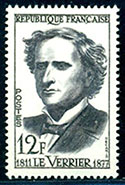
Max Le Verrier, (1891-1973)
*see Examples for Sale
** Max Le Verrier, French Sculptor who I collect and I have examples on my Site, was born in Neuilly sur Seine, France on January 29, 1891.
His mother was Belgian and his father was a Parisian Goldsmith and Jeweler on Boulevard Malesherbes in Paris.
Max LE VERRIER was in the WWI in France.
He returned to Paris after the November 11th 1918 armistice with little means, but with a huge independent spirit. From that time forward, he would devote all of his life to sculpture.
He rented an artist atelier, studio on “Rue du Théâtre”, where he worked 12 hours per day.
At the outset, he made some terra cotta pieces of art, and carved his first sculpture, the famous PELICAN in a very 1925’s style.
This sculpture had great success and was at the foundation of his workshop created in 1919.
He made everything on his own, from the creation (the founding, chaseling, patina) to the selling of his pieces of art.
Ses œuvres sont conservées, entre autres, au musée des beaux-arts de Lyon , Victoria & Albert Museum, Londres, Grande Bretagne, Musée du Design de Gand, Belgique et Musée Rolf de Marès, Stockholm, Suède.
COROMANDEL *see Examples for Sale
During the Victorian period and the reign of Queen Victoria, Coromandel was considered one of the most exotic, luxurious and expensive woods to work with and it was the veneer of choice for some of the finest boxes. Victoria was Queen of the United Kingdom of Great Britain and Ireland from 20 June 1837 until her death, January 22, 1901. From 1 May 1876, she had the additional title of Empress of India. Coromandel wood was sourced from India and South East Asia and was an incredibly dense, close-grained wood. Visually a more vibrant and figured (patterned) variety from the Ebony family, the actual species of Coromandel became virtually extinct by the beginning of the 20th century. Today, the nearest relation to Coromandel is Macassar Ebony.
STERLING SILVER, French & English *see Examples for Sale
French Sterling Silver (finer than English Sterling, since 1838 has a Silver content of .950 parts Silver/1000, versus .925/1000 parts for English Silverr and, almost Always is Hallmaarked because of Revenue Laws in France. I avoid anything Sold as French Sterling without Hallmarks & particularly when Seller says it has been Tested.
ODIOT Silversmiths, Paris, France
** The Odiot firm was purchased by BOULENGER Silversmiths in 1906.
'RARE' used in Descriptions
** All too often, one sees in a Description the Noun 'RARE' which has now acquired a Secondary Connotation and one should remember the Definition offered by Merriam Webster - "marked by unusual quality, merit or appeal - Distinctive, Uncommon"
SALT
** That SALT which is Sodium Chloride, essential for animal life is Toxic to most land plants. CAREFUL leaving it in your Silver Salt Cellars, risk of corrosion. This is why Salt Cellars have been Gilded or have interior Glass or Crystal Liners. Don't leave Salt between the Liner and Salt Cellar. Have you tried Salt from France, Hawaii, New Zealand?
WINE' - France, and where it comes from..
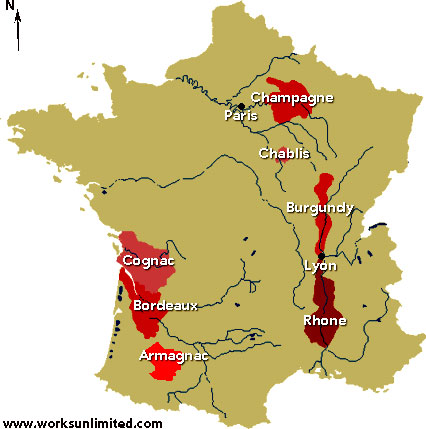
Christofle & Alfénide - Household Names in French Silver
** The Name 'Alfénide' was derived from a Firm of Chemists & Silversmiths in Paris France which Christofle acquired in the last quarter of the XIXth Century. See an exsample in my 'Daily Deals'. I believe that this firm helped Charles Christofle with his revolustionary quadruple plating of Silver.
Art Deco
** The Name, Art Deco, is derived from the Famous "Exposition des Arts Décoratifs" which was held in Paris, France in 1925 and brought about the 2nd Revival of Art following the Art Nouveau Period.
Baccarat
** The famous and often infamous acid engraved BACCARAT Hallmark only came into existence circa 1936 and before that, Baccarat used stick on Lables with a similar hallmark. These latter labels were lost, washed off, removed etc. and some unsrupulous people use them to deceive. SEE an Example of the Hallmarks under Crystal & Glass. BEWARE!!!
Sterling Silver
** The term "Sterling Silver" emerged in England by the 13th century. The minimum Sterling Silver Standard within the U.K. has been historically set at the STERLING standard
(92.5 %) purity and this is represented by the Lion, either PASSANT for English or Lion RAMPANT for Scottish. BEWARE of MEXICAN Silver on eBay with just a '925' Mark, which alone, is not a Hallmark & does NOT necessarily mean Sterling Silver! THE USA & Canada uses 92.5% for their minimum Sterling Content!
Brittania Silver
Britannia silver is an alloy of Silver containing 95.84% Silver. This Standard of Silver, was introduced in England by Act of Parliament in 1697 to replace Sterling Silver as the obligatory standard for items of Silver. The Lion Passant Gardant Hallmark denoting Sterling was replaced with "the figure of a woman commonly called Britannia", and the Leopard's Head Mark of the Worshipful Company of Goldsmiths was replaced with a "Lion's Head Erased". Britannia standard silver was first introduced by the British government as part of the great Recoinage Scheme of William III from 1696, when attempts were made to limit the clipping and melting of Sterling Silver Coinage. It was thought that by maintaining a higher standard for Silver there would be less incentive to put the newly issued Sterling Coins in the melting pot.
Sterling silver was approved again for use by Silversmiths from 1 June 1720, and thereafter Britannia Silver has remained an optional standard for silver assay in the United Kingdom and Ireland. Since the Hallmarking changes of 1 January 1999, Britannia Silver has been denoted by the millesimal fineness hallmark '958', with the Symbol of Britannia being applied optionally.
About SEVRES, French Porcelain:
Sevres Porcelain traces its roots in France to early craftsmen who had small manufacturing operations in such places as Lille, Rouen. St. Cloud, and most notably Chantilly. It is from Chantilly that a cadre of workers migrated to the Chateau de Vincennes near Paris to form a larger porcelain manufactory in 1738. French King Louis XV, perhaps inspired by his rumored relationship with mistress Madame de Pompadour, took an intense interest in porcelain and moved the operation in 1756 to even larger quarters in the Paris suburb of Sevres. Sevres was also conveniently near the home of Madame de Pompadour and the King's own Palace at Versailles.
From the outset the king's clear aim was to produce Sevres Porcelain that surpassed the established Saxony works of Meissen and Dresden. Though the French lacked an ample supply of kaolin, a required ingredient for hard-paste porcelain (pate dure), their soft-paste porcelain (pate tendre) was fired at a lower temperature and was thus compatible with a wider variety of colors and glazes that in many cases were also richer and more vivid. Unglazed white Sevres Porcelain "biscuit" figurines were also a great success. However, soft-paste Sevres Porcelain was more easily broken. Therefore, early pieces of Sevres Porcelain that remain intact have become rare indeed.
About the time when Napoleon Bonaparte named himself Emperor of France (1804), a new director was named for the Sevres Porcelain Factory. Alexandre Brongniart, highly educated in many fields, resurrected Sevres Porcelain. Soft-paste porcelain was eliminated altogether thanks to the earlier discovery of kaolin near Limoges. For 4 decades until his death, Brongniart presided over monumental progress for Sevres Porcelain, catering not only to Napoleon himself, but at last to include the more financially profitable mid-priced market in the emerging middle class.
'Christofle' with 'Cardeilhac' with both Silversmith's French Silver Halllmarks, on a Timbale
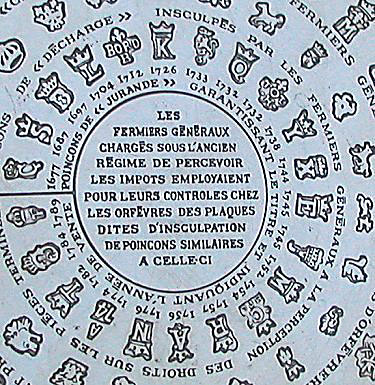
18th Century 'Fermiers Généreaux' 1789 French Silver Halllmarks

Charles Louis Eloi Pernet belonged to the third generation of knife makers in Biesles. In 1901, at the age of 12, he became an apprentice in a local cutlery. It was not until 1920 that Eloi decided to establish his own factory, - Eloi Pernet.
With a small group of the best artisans he could find, Eloi quickly became renown for its craft.
In 1925 Eloi won the "Meilleur Ouvrier de France" (Best Craftsman of France) award for a multi-blade knife.
The following year, he and his artisans again won the "Meilleur Ouvrier de France" award.
The World began to take notice as did high end firms like Hermes, Dupont, Vuitton, and Dunhill all sought Eloi's fine craftsmanship adding their prestigious names to items produced by Eloi Pernet.
Be 'selective' and be patient.
Liliana, I looked at eBay item #165198328844, Eloi Pernet 5 Francs Coin with 3 utensils. The 'Spring' is Missing from the Scissors. Not disclosed. Seller should know better.
Wait for one Complete.
Francine, I looked at eBay item #173386361076, Eloi Pernet 5 Francs Coin with 3 utensils. Tthe 'Spring' is Missing from the Scissors. Not mentioned. Seller should know better.
Bob, I just looked at eBay item #173322483740, a 20th Century Wine Taster, Silversmith is 'Parrod', not as stated and not C. 1840.
Joyce, I looked at eBay #162615313127, Wine Taster. Read Description. NO Hallmarks only the Coin is used to Date the Metal + Testing it. Handle missing. Avoid it.
Rosanne, Good Question. Be Careful and read very carefully the DESCRIPTIONS. ... Item #323097215482 Knife Rests, is NOT an original, a Copy of Rabier's Work.
Personally, I avoid any overpolished Silver items as the Patina cannot be restored and @ $300. only a Fool would buy it. See also item # 172111696315 which is also overpolished and to be avoided. In French one calls them 'trop astiqué' or,' trop Nettoyé'.
I would pass on this one and wait for another in better condition & @ $200. overpriced!.
Pass on it, unless you like the item without verifiable Hallmarks.
MARCEL RENARD - (1893-1974) *see Examples for Sale
** Marcel Renard, né à Lyon le 5 août 1893, mort à Paris le 15 mars 1974, est un sculpteur et graveur- médailleur français. Il se fixe à Paris en 1920 et travaille avec Roux-Spitz sur ses chantiers lyonnais, qu’il s’agisse de la Villa Weitz. (1923), du restaurant Berrier et Millet (1924-1928, avec Janniot, détruit) ou encore de la sépulture Vetter au cimetière de la Croix-Rousse à Lyon (1924). Ses œuvres sont conservées, entre autres, au musée des beaux-arts de Lyon , Victoria & Albert Museum, Londres, Grande Bretagne, Musée du Design de Gand, Belgique et Musée Rolf de Marès, Stockholm, Suède.
Max Le Verrier, (1891-1973) *see Examples for Sale
** Max Le Verrier, French Sculptor who I collect and I have examples on my Site, was born in Neuilly sur Seine, France on January 29, 1891. His mother was Belgian and his father was a Parisian Goldsmith and Jeweler on Boulevard Malesherbes in Paris. Max LE VERRIER was in the WWI in France. He returned to Paris after the November 11th 1918 armistice with little means, but with a huge independent spirit. From that time forward, he would devote all of his life to sculpture. He rented an artist atelier, studio on “Rue du Théâtre”, where he worked 12 hours per day. At the outset, he made some terra cotta pieces of art, and carved his first sculpture, the famous PELICAN in a very 1925’s style. This sculpture had great success and was at the foundation of his workshop created in 1919. He made everything on his own, from the creation (the founding, chaseling, patina) to the selling of his pieces of art.
Ses œuvres sont conservées, entre autres, au musée des beaux-arts de Lyon , Victoria & Albert Museum, Londres, Grande Bretagne, Musée du Design de Gand, Belgique et Musée Rolf de Marès, Stockholm, Suède.
COROMANDEL *see Examples for Sale
During the Victorian period and the reign of Queen Victoria, Coromandel was considered one of the most exotic, luxurious and expensive woods to work with and it was the veneer of choice for some of the finest boxes. Victoria was Queen of the United Kingdom of Great Britain and Ireland from 20 June 1837 until her death, January 22, 1901. From 1 May 1876, she had the additional title of Empress of India. Coromandel wood was sourced from India and South East Asia and was an incredibly dense, close-grained wood. Visually a more vibrant and figured (patterned) variety from the Ebony family, the actual species of Coromandel became virtually extinct by the beginning of the 20th century. Today, the nearest relation to Coromandel is Macassar Ebony.
STERLING SILVER, French & English *see Examples for Sale
French Sterling Silver (finer than English Sterling, since 1838 has a Silver content of .950 parts Silver/1000, versus .925/1000 parts for English Silverr and, almost Always is Hallmaarked because of Revenue Laws in France. I avoid anything Sold as French Sterling without Hallmarks & particularly when Seller says it has been Tested.
ODIOT Silversmiths, Paris, France
** The Odiot firm was purchased by BOULENGER Silversmiths in 1906.
'RARE' used in Descriptions
** All too often, one sees in a Description the Noun 'RARE' which has now acquired a Secondary Connotation and one should remember the Definition offered by Merriam Webster - "marked by unusual quality, merit or appeal - Distinctive, Uncommon"
SALT
** That SALT which is Sodium Chloride, essential for animal life is Toxic to most land plants. CAREFUL leaving it in your Silver Salt Cellars, risk of corrosion. This is why Salt Cellars have been Gilded or have interior Glass or Crystal Liners. Don't leave Salt between the Liner and Salt Cellar. Have you tried Salt from France, Hawaii, New Zealand?
WINE' - France, and where it comes from..
Christofle & Alfénide - Household Names in French Silver
** The Name 'Alfénide' was derived from a Firm of Chemists & Silversmiths in Paris France which Christofle acquired in the last quarter of the XIXth Century. See an exsample in my 'Daily Deals'. I believe that this firm helped Charles Christofle with his revolustionary quadruple plating of Silver.
Art Deco
** The Name, Art Deco, is derived from the Famous "Exposition des Arts Décoratifs" which was held in Paris, France in 1925 and brought about the 2nd Revival of Art following the Art Nouveau Period.
Baccarat
** The famous and often infamous acid engraved BACCARAT Hallmark only came into existence circa 1936 and before that, Baccarat used stick on Lables with a similar hallmark. These latter labels were lost, washed off, removed etc. and some unsrupulous people use them to deceive. SEE an Example of the Hallmarks under Crystal & Glass. BEWARE!!!
Sterling Silver
** The term "Sterling Silver" emerged in England by the 13th century. The minimum Sterling Silver Standard within the U.K. has been historically set at the STERLING standard (92.5 %) purity and this is represented by the Lion, either PASSANT for English or Lion RAMPANT for Scottish. BEWARE of MEXICAN Silver on eBay with just a '925' Mark, which alone, is not a Hallmark & does NOT necessarily mean Sterling Silver! THE USA & Canada uses 92.5% for their minimum Sterling Content!
Brittania Silver
Britannia silver is an alloy of Silver containing 95.84% Silver. This Standard of Silver, was introduced in England by Act of Parliament in 1697 to replace Sterling Silver as the obligatory standard for items of Silver. The Lion Passant Gardant Hallmark denoting Sterling was replaced with "the figure of a woman commonly called Britannia", and the Leopard's Head Mark of the Worshipful Company of Goldsmiths was replaced with a "Lion's Head Erased". Britannia standard silver was first introduced by the British government as part of the great Recoinage Scheme of William III from 1696, when attempts were made to limit the clipping and melting of Sterling Silver Coinage. It was thought that by maintaining a higher standard for Silver there would be less incentive to put the newly issued Sterling Coins in the melting pot. Sterling silver was approved again for use by Silversmiths from 1 June 1720, and thereafter Britannia Silver has remained an optional standard for silver assay in the United Kingdom and Ireland. Since the Hallmarking changes of 1 January 1999, Britannia Silver has been denoted by the millesimal fineness hallmark '958', with the Symbol of Britannia being applied optionally.
About SEVRES, French Porcelain:
Sevres Porcelain traces its roots in France to early craftsmen who had small manufacturing operations in such places as Lille, Rouen. St. Cloud, and most notably Chantilly. It is from Chantilly that a cadre of workers migrated to the Chateau de Vincennes near Paris to form a larger porcelain manufactory in 1738. French King Louis XV, perhaps inspired by his rumored relationship with mistress Madame de Pompadour, took an intense interest in porcelain and moved the operation in 1756 to even larger quarters in the Paris suburb of Sevres. Sevres was also conveniently near the home of Madame de Pompadour and the King's own Palace at Versailles.
From the outset the king's clear aim was to produce Sevres Porcelain that surpassed the established Saxony works of Meissen and Dresden. Though the French lacked an ample supply of kaolin, a required ingredient for hard-paste porcelain (pate dure), their soft-paste porcelain (pate tendre) was fired at a lower temperature and was thus compatible with a wider variety of colors and glazes that in many cases were also richer and more vivid. Unglazed white Sevres Porcelain "biscuit" figurines were also a great success. However, soft-paste Sevres Porcelain was more easily broken. Therefore, early pieces of Sevres Porcelain that remain intact have become rare indeed.
About the time when Napoleon Bonaparte named himself Emperor of France (1804), a new director was named for the Sevres Porcelain Factory. Alexandre Brongniart, highly educated in many fields, resurrected Sevres Porcelain. Soft-paste porcelain was eliminated altogether thanks to the earlier discovery of kaolin near Limoges. For 4 decades until his death, Brongniart presided over monumental progress for Sevres Porcelain, catering not only to Napoleon himself, but at last to include the more financially profitable mid-priced market in the emerging middle class.
'Christofle' with 'Cardeilhac' with both Silversmith's French Silver Halllmarks, on a Timbale
18th Century 'Fermiers Généreaux' 1789 French Silver Halllmarks